
 Medical Modular Storage
 English
 Español
 Portugues
 Français
 Deutsch
Is Poor Tank Mixing Always Caused by an Undersized Agitator?
When a mixing tank does not perform as expected, engineers often assume the agitator is too small or the motor lacks sufficient power. However, poor mixing is frequently caused by insufficient circulation rather than insufficient installed power.
Inadequate circulation can result in solids settling, dead zones, uneven chemical concentration, and temperature stratification. In many low- to medium-viscosity applications, improving liquid movement can be more effective than simply increasing agitator power.
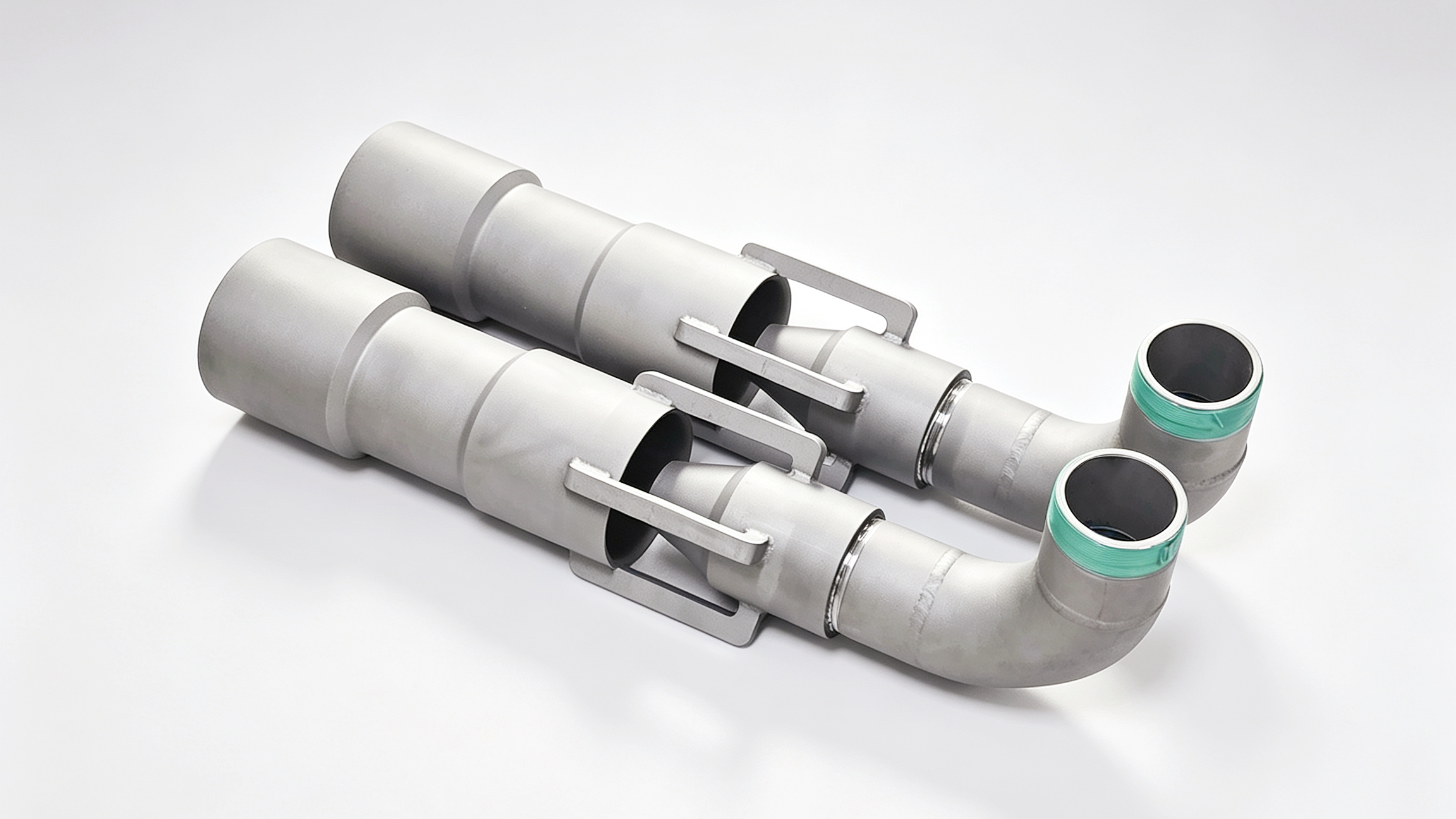
A tank mixing eductor provides a hydraulic mixing solution by using pump energy to generate circulation inside the tank.
What Is a Tank Mixing Eductor?
A tank mixing eductor, also known as a Venturi eductor or jet mixer, is a device designed to circulate liquid within a tank.
Unlike a mechanical agitator that uses a rotating impeller, an eductor uses a high-velocity liquid jet to entrain surrounding fluid and create circulation. Since it has no moving parts, it offers low maintenance and reliable operation in many industrial applications.
Tank mixing eductors are commonly used for liquid circulation, solids suspension, and blend maintenance in low- to medium-viscosity systems.
How Does a Tank Mixing Eductor Work?
A tank mixing eductor operates based on the Venturi principle.
Pressurized liquid enters the eductor and accelerates through the nozzle, creating a low-pressure area that draws in surrounding liquid. The combined flow exits through the diffuser and generates circulation throughout the tank.
The eductor does not increase pump output. Instead, it uses existing pump energy more efficiently by circulating additional liquid within the vessel. Depending on operating conditions, total circulation can typically reach several times the motive flow.
Tank Mixing Eductor vs. Mechanical Agitator
Both technologies improve tank mixing, but they are designed for different process requirements.
|
Feature |
Tank Mixing Eductor |
Mechanical Agitator |
|
Mixing Method |
Hydraulic circulation |
Rotating impeller |
|
Moving Parts |
None |
Yes |
|
Maintenance |
Low |
Moderate to High |
|
Installation |
Compact |
Requires motor and mechanical assembly |
|
Best For |
Circulation, solids suspension, blend maintenance |
High shear and intensive mixing |
|
Viscosity Range |
Low to Medium |
Low to High |
A tank mixing eductor is often preferred when circulation and solids suspension are the main objectives. A mechanical agitator is generally more suitable for high-viscosity fluids, rapid blending, emulsification, or applications requiring strong shear.
When Should You Choose a Tank Mixing Eductor?
A tank mixing eductor is a suitable solution when the process requires:
- Effective tank circulation
- Solids suspension
- Uniform chemical concentration
- Reduced maintenance
- Use of an existing recirculation pump
For applications where mixing intensity, high shear, or precise mechanical control is required, a mechanical agitator may provide better performance.
Common Applications of Tank Mixing Eductors
Tank mixing eductors are widely used in industries where reliable circulation and low-maintenance operation are important.
|
Industry |
Typical Applications |
|
Water & Wastewater |
Chemical dosing and sediment control |
|
Chemical Processing |
Solution blending and solids suspension |
|
Food & Beverage |
Liquid mixing and cleaning circulation |
|
Mining |
Slurry circulation |
|
Pulp & Paper |
Chemical and stock circulation |
How to Select the Right Tank Mixing Eductor
Selecting the correct eductor depends on the overall process conditions, including:
- Tank size and geometry
- Liquid viscosity
- Solids concentration
- Required circulation rate
- Pump flow and pressure
- Eductor quantity and installation location
Proper sizing and placement are essential to achieve effective circulation throughout the tank.
Frequently Asked Questions
1. Can a tank mixing eductor replace a mechanical agitator?
In suitable low- to medium-viscosity applications, an eductor can replace a mechanical agitator when circulation or solids suspension is the main requirement. However, it is not a universal replacement for all mixing duties.
2. Can eductors keep solids suspended?
Yes. Properly selected eductors can generate sufficient circulation to reduce settling and maintain solids suspension.
3. Do eductors require maintenance?
Because they have no moving parts, eductors generally require less maintenance than mechanical mixers. However, inspection may be needed in applications containing abrasive particles or debris.
4. Can eductors handle high-viscosity liquids?
Eductors are most effective in low- to medium-viscosity liquids. Mechanical agitators are usually preferred for highly viscous materials.
Need Help Selecting the Right Tank Mixing Solution?
The right mixing system depends on your tank design, liquid properties, pump conditions, and process requirements.
Our engineering team can help evaluate your application and recommend a suitable tank mixing eductor configuration.
Contact us for technical support and application guidance.