 Medical Modular Storage
 English
 Español
 Portugues
 Français
 Deutsch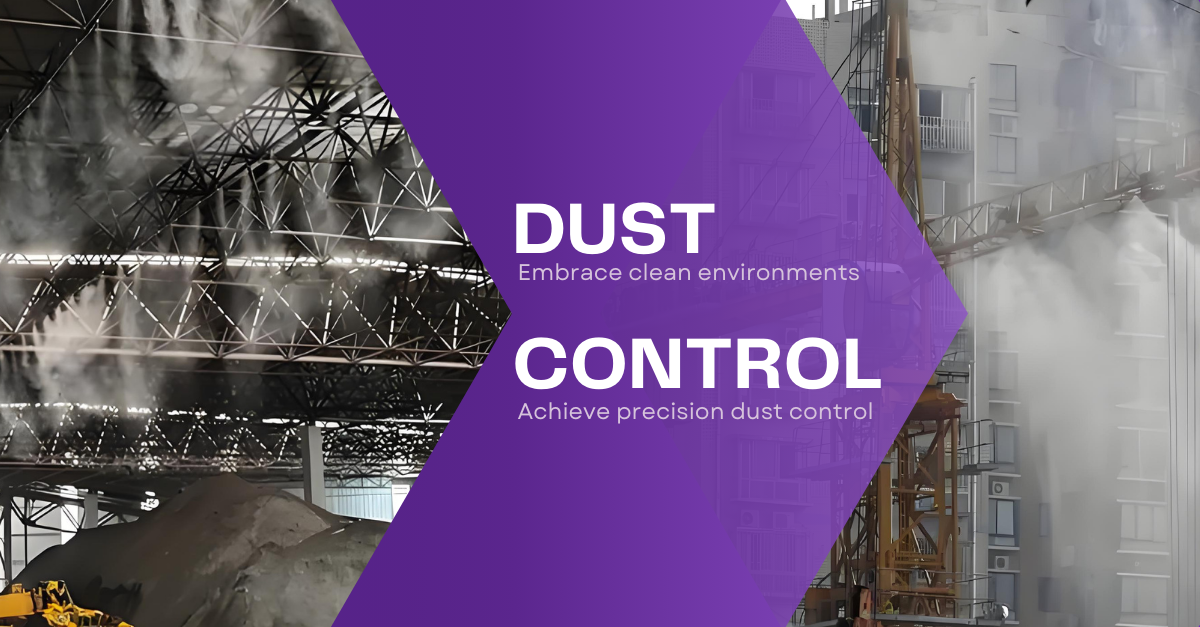
Unwanted dust is a common issue in many industrial and commercial operations. It can contaminate products, damage equipment, and create unhealthy working environments.
To address this problem, we offer a range of dust suppression nozzles designed to remove airborne particles and settle them for collection, cleaning, and sterilization. This article will discuss choosing the right nozzle for dust control based on your specific needs.
Dust control nozzles work by emitting water droplets of a specific size, allowing dust particles to adhere to their surface. When the dust particles become heavy due to the added weight of the water, gravity pulls them down until they come into contact with the floor or a collection device.
There are several types of dust control nozzles available, including flat fan, fine spray, and misting nozzles:
- Flat fan nozzles are suitable for applications requiring even coverage over large areas, such as conveyor belts or dust collection equipment
- Fine spray nozzles are ideal for targeting specific areas where dust is generated, like collection bins
- Misting nozzles are effective in high dust formation points or transfer points.
Determine the industry and specific operation where the nozzle will be used. Dust control needs vary across mining, agriculture, paper and milling, waste management, and more.
2. Environmental Conditions
Consider the environmental conditions that may impact the effectiveness of the nozzle, such as outdoor wind, blowing fans, or movable equipment. Spray nozzles should prevent excessive wetting while accounting for these factors.
3. Droplet Size
The droplet size should be similar to the dust particle for proper adhesion. Flat fan nozzles provide even coverage, fine spray nozzles target specific areas, and misting nozzles are suitable for high dust formation points.
4. Mobility
Decide whether the nozzle should be stationary or mobile. Stationary nozzles can be installed over conveyor belts or dust collection equipment, while mobile nozzles can be attached to vehicles for dust suppression in moving work areas or along roads.
5. Water Flow Rate
Consider the water flow rate required for your application. High flow rates are suitable for large areas, while lower flow rates are better for targeted dust control.
Dust control nozzles offer several benefits, including:
- Improved working environments by reducing airborne dust particles
- Prevention of equipment damage and product contamination
- Compliance with health and safety regulations
- Increased operational efficiency
By considering the industry, environmental conditions, droplet size, mobility, and water flow rate, you can select the most suitable nozzle for your specific application. Our range of dust suppression nozzles is designed to provide reliable control and suppression results, ensuring a healthier and more efficient working environment.