
 Medical Modular Storage

 English
 Español
 Portugues
 Français
 Deutsch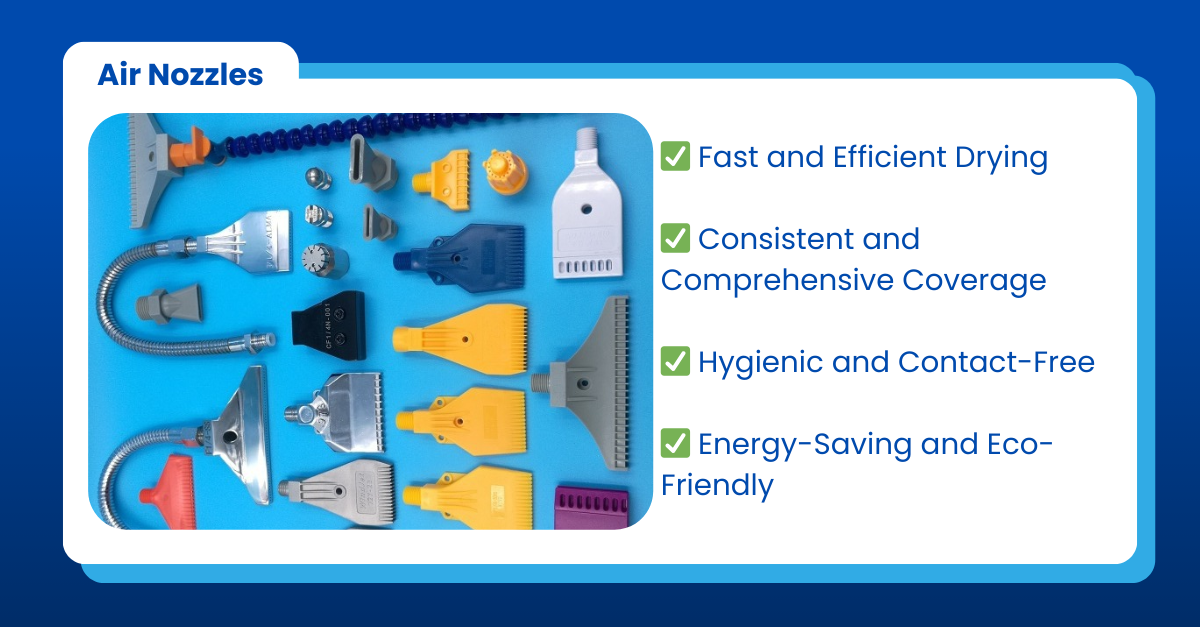
Pasteurization is a key sterilization process in the food industry, eliminating harmful microorganisms and extending product shelf life. However, residual moisture on food surfaces after pasteurization can encourage bacterial growth, compromising safety and quality. Air blow nozzles offer an efficient, hygienic drying solution, making them essential in post-pasteurization drying applications.
Advantages of Air Nozzles
✅ Fast and Efficient Drying – Quickly removes moisture, boosting production efficiency.
✅ Consistent and Comprehensive Coverage – Adjustable nozzle angles ensure even, thorough drying.
✅ Hygienic and Contact-Free – Non-contact drying minimizes contamination risks.
✅ Energy-Saving and Eco-Friendly – Eliminates heating, reducing energy consumption and environmental impact.
Choosing the Right Air Nozzle
To optimize drying performance, consider:
Airflow Speed & Volume – Match airflow intensity to the material, shape, and moisture level.
Nozzle Type – Flat jet or multi-channel nozzles ensure even airflow distribution.
Material – Stainless steel or food-grade plastic meets hygiene standards.
Case Study: Drying Bottled Beverages
Drying bottles and caps after pasteurization in bottled beverage production is crucial to prevent bacterial growth and maintain product integrity.
Traditional Drying Method
Uses heating equipment, leading to high energy consumption and potential bottle deformation.
Air Nozzle Solution
Installs high-speed air nozzles on both sides of the production line for efficient moisture removal.

Effective drying after pasteurization is essential for food safety and quality. Air nozzles provide a reliable, energy-efficient solution that enhances production efficiency while maintaining hygiene standards. By selecting the right nozzles, manufacturers can optimize drying performance and improve overall product quality.