
 Medical Modular Storage

 English
 Español
 Portugues
 Français
 Deutsch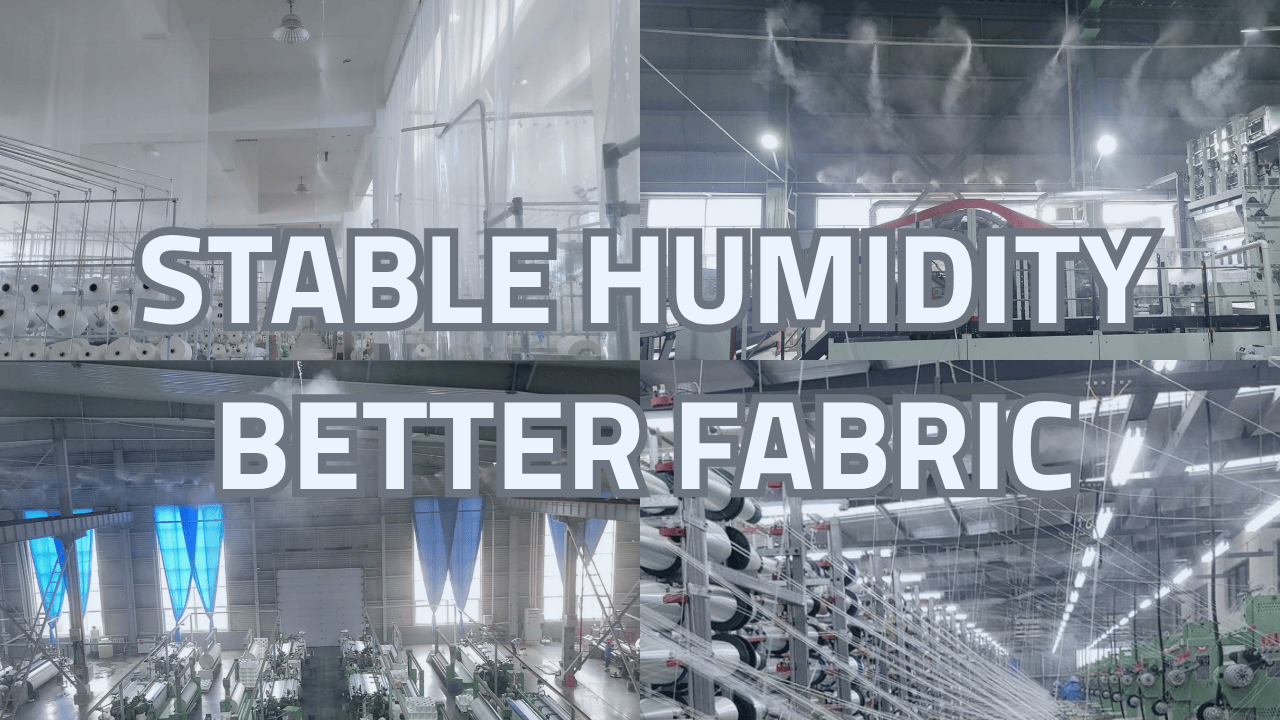
In textile production, controlling air humidity is one of the most important factors that affect product quality, production efficiency, and equipment stability. Different fibers react differently to humidity:
- Cotton fibers: Optimal relative humidity is 65%–70% RH. Low humidity increases breakage and fly lint.
- Wool fibers: Ideal humidity is around 70%–75% RH. Low humidity reduces the natural curl of wool, making fibers stiffer.
- Synthetic fibers: Less moisture-absorbing but highly prone to static electricity in dry conditions.
If humidity is not properly controlled, it can lead to higher yarn breakage, lower fabric quality, increased energy costs, and faster equipment wear. Installing a spray humidification system is not just about creating a better environment—it is a critical investment in competitiveness.
1. Eliminate Static Electricity for Continuous Production
Low humidity causes friction between fibers, generating static electricity that can lead to yarn entanglement, lint adhesion, and frequent breakages. Spray humidifiers quickly raise humidity levels, eliminating static charges and ensuring stable, continuous production.
2. Improve Fibre Flexibility and Reduce Yarn Breakages
Fiber moisture content depends on air humidity. Low humidity makes fibers dry and brittle, while proper humidity keeps fibers flexible. This reduces yarn breakages, improves production efficiency, and helps maintain consistent fabric quality.
3. Reduce Dust and Lint for a Cleaner Workshop
Dust and lint not only affect fabric quality but also pose health risks to workers. Spray humidification systems settle airborne particles, lowering dust concentration and improving air quality throughout the workshop.
4. Stabilize Product Quality and Dimensions
Fluctuating humidity can cause yarn shrinkage and fabric distortion. Maintaining stable humidity ensures yarn and fabric dimensions remain consistent, preserving strength, texture, and color.
5. Energy Efficiency and Maintenance Advantages
Modern spray humidification systems use high-efficiency nozzles, such as ultrasonic atomizing nozzles, producing droplets as fine as 1–10 microns. These evaporate quickly without wetting surfaces, offering precise humidity control with low energy consumption and minimal maintenance compared to traditional methods.
Recommended Spray Humidification Solutions
Industrial Air Humidifiers
Ideal for large-scale spinning, weaving, and finishing workshops, providing uniform and controllable humidification. Compact design and easy maintenance make them a practical choice for textile production.
Ultrasonic Atomizing Nozzles
Using high-frequency vibration, these nozzles produce fine, uniform mist to eliminate static, suppress lint and dust, and achieve precise humidity control with low energy consumption and no visible water residue.
Contact us today to find the perfect spray humidification system for your textile workshop. Improve production efficiency, stabilize product quality, reduce energy costs, and maintain a cleaner, safer working environment.